Everyone is in awe of what AI has been doing, making us feel the excitement while terrifying us with what lies ahead. AI is no longer a buzzword, but a real enigma that we all have to uncover. This does not exempt the design world. Actually, it may be one of the first things that artificial intelligence has disrupted. Let's dig deeper into what AI is capable of and what's in store for designers.
What AI is Capable of in Today's Design
Currently, AI has become a practical partner that many designers use. They use it to handle both the tedious and the imaginative sides of creative work. AI's strength lies in two main categories: automation and ideation.
The Automation of Repetitive Tasks
Small but necessary adjustments take up a huge chunk of a designer's time. With the help of AI, the process has been shortened.
- Resizing made easy: You can now resize your visuals easily with the help of AI tools.
- Template generation: You can now use AI to create layouts for social media posts, online ads, or presentations.
- Basic branding support: You can now auto-apply logos, color palettes, or typography rules across your set or materials.
- Background removal and image cleanup: Tasks that were once laborious and time-consuming can now be done in seconds.
Ideation with AI Design Tools
Aside from its efficiency, AI can speed up the brainstorming stage.
- Concept generation: You can now generate several visual directions from one prompt.
- Mood boards and inspiration: You can now use AI to pull together thematic collections of images, fonts, and colors, not in hours or days, but in seconds.
- Prototyping support: AI design tools can suggest layouts or UX flows to follow your user behavior data.
- Variation exploration: Designers can test multiple styles without having to start from scratch. You can now choose whether it's minimalist or bold, you like, quickly and easily.
In short, AI widens the range of possibilities while speeding up your iteration processes.
What AI Won't Be Able to Replace
While AI design tools are now capable of myriad design tasks, they clearly have their limitations. Human expertise still dominates areas and is deemed irreplaceable. This includes creativity, strategy, and cultural nuance.
Human Creativity and Emotional Storytelling
- Original Ideas: AI can only remix existing patterns. This means they can only create from what's already out there. It struggles to invent new concepts that break conventions or surprise audiences.
- Narrative Depth: Emotional storytelling comes from empathy and lived experience. Algorithm can't replace this.
- Strategic Vision: Designers create visuals with business goals in mind. They also understand market positioning and long-term brand growth, something you can expect an AI tool to have the insights for.
Brand Voice and Cultural Context
- Consistent Visuals Across Platforms: Designers use judgment when they maintain your brand's unique tone and personality. Automated templates can't.
- Cultural Sensitivity: Designers understand the subtle cues in language, symbolism, or regional traditions. AI does not, resulting in tone-deaf or inappropriate designs.
- Audience Connection: Designers understand the nuances of how your message will resonate with your specific audience. AI lacks that understanding.
In essence, AI can speed up the design production process but can never replace a human designer's ability to craft meaning, give cultural relevance, and build emotional connections.
How Designers are Adapting
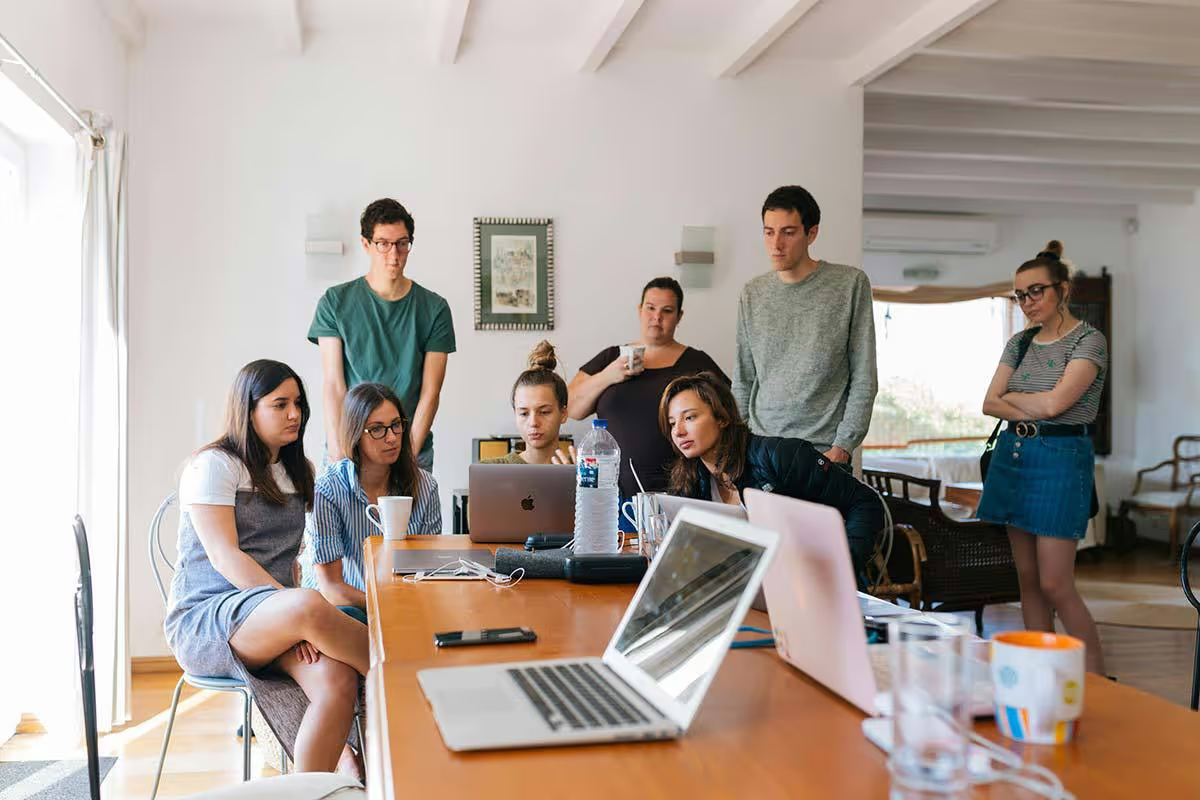
Photo credit: Michael Burrows on PexelsInstead of viewing AI design tools as rivals, many designers have learned to embrace them. They use AI as a productivity-enhancing tool. This shift can be considered less abour replacement, but more about redefining the designer's role.
AI as a Productivity Tool
- More Efficient Workflow: Designers can use AI to handle repetitive edits, generate quick variations, and manage production tasks that they used to spend hours on.
- Idea Expansion: Designers use AI to get inspiration from. These tools offer multiple directions that designers can use to refine.
- More Value-Added Work: Designers can focus on strategic and creative challenges when routine tasks are handled.
A Move Toward Creative Direction
- Strategic Leadership: Designers are now positioned as creative directors who guide these AI tools, making them aligned with brand goals and audience needs.
- Problem-Solving Mindset: The designer's role now emphasized on identifying their client's challenges and providing solutions, not just producing design assets.
- Human Judgment: Designers can ensure that AI-generated creatives fit their client's brand voice, cultural context, and emotional storytelling.
Industries Most Affected by AI Design Tools
AI design tools and platforms are changing certain industries more than others. They are the following:
- Social Media Marketing: AI can generate a post instantly and adapt it for various channels.
- E-Commerce Product Visuals: Faster catalog updates with background removal and product mockups, thanks to AI.
- Ad Creative Production: Multiple ad variations in seconds, ideal for testing and targeting.
- Basic Logo and Template Design: Simple logos in seconds and ready-made templates give startups cost-effective options.
- Presentation and Pitch Deck Design: Professional-looking layouts and formatting in seconds.
How Businesses Should Use AI in Creative Services
Photo credit: Igor Omilaev on UnsplashIf you're thinking of using AI design tools for your business, here are the areas where you'll need to, and where you don't:
Where AI is Best
- Quick Marketing Assets: Social media posts, email graphics, banner ads, and others can be generated using AI templates.
- Drafting Concepts: Leave the starting sketches and mood boards to AI, as they can create multiple versions instantly.
- Simple, Repetitive Design Needs: Let AI do the resizing, background removal, and formatting.
When Human Designers are Needed
- Branding Projects: An effective brand identity needs human insight into a brand's values, positioning, and emotional connections.
- Web Design and UX: You need to incorporate empathy, testing, and strategic thinking to craft the best user experience, which AI cannot do.
- High-Stakes Visuals: Rebrands, flagchip campaigns, and product launches all need human intervention as these require judgment, originality, and polish for them to work.
You may choose to do what many business owners have done: use AI as a supporting tool to human designers.
Conclusion: Will Designers Become Obsolete?
AI is transforming how creative services work and will probably continue to do so in the future. However, these tools are only tools that can never replace the human mind, whether it's designing a logo or crafting a social media post. The answer to the question, "Will designers become obsolete?" is a resounding NO!
Cover photo credit: Kindel Media on Pexels